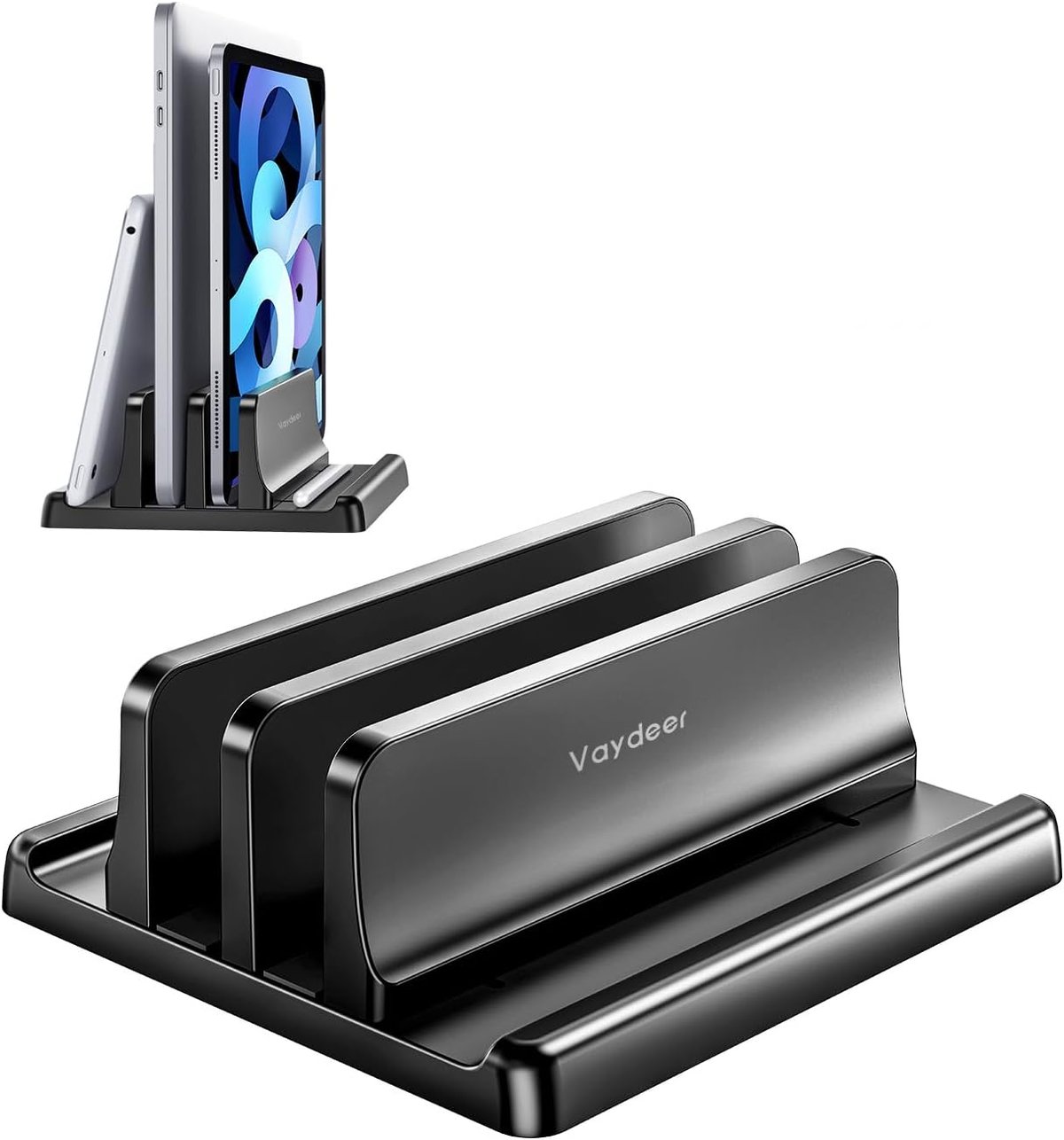
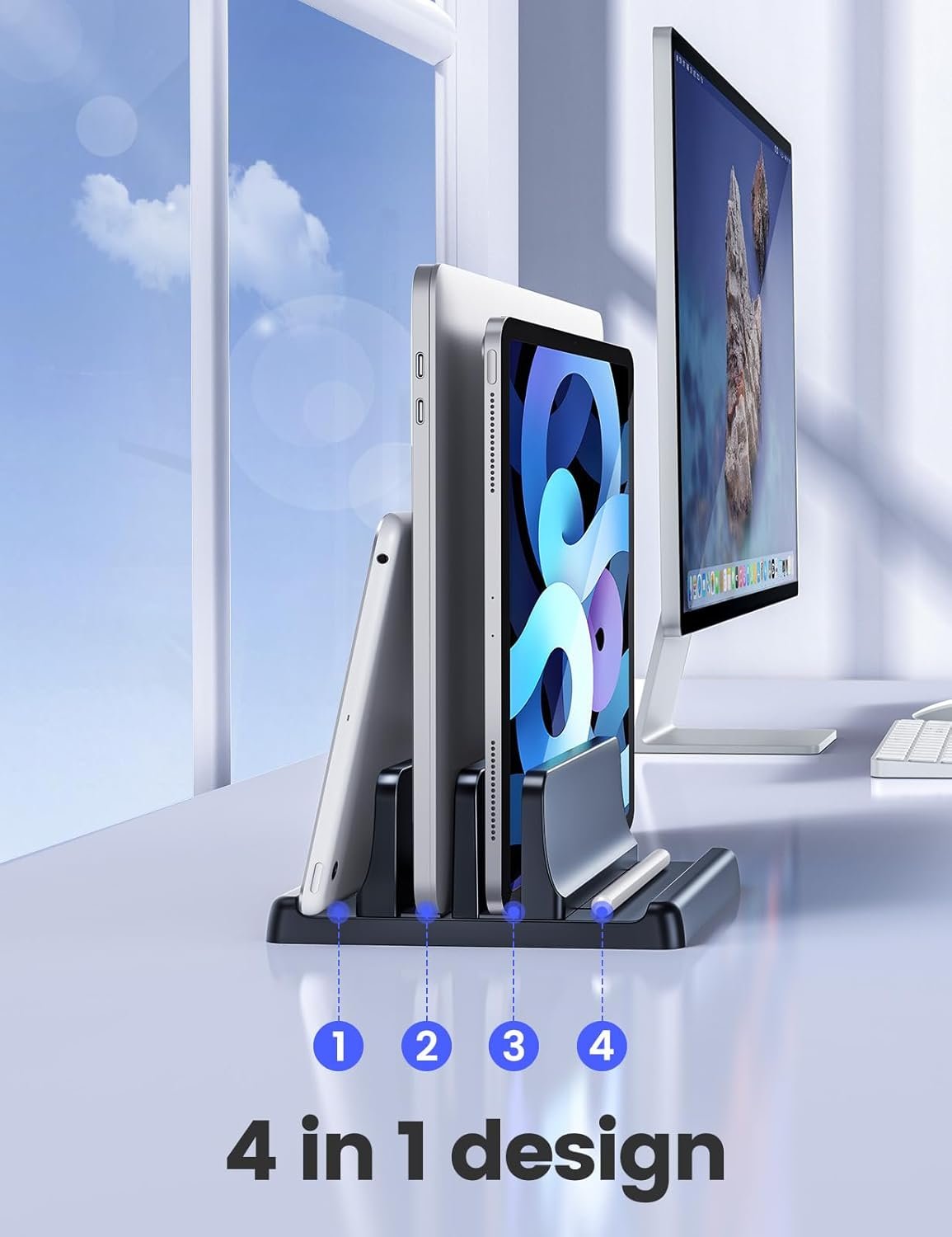
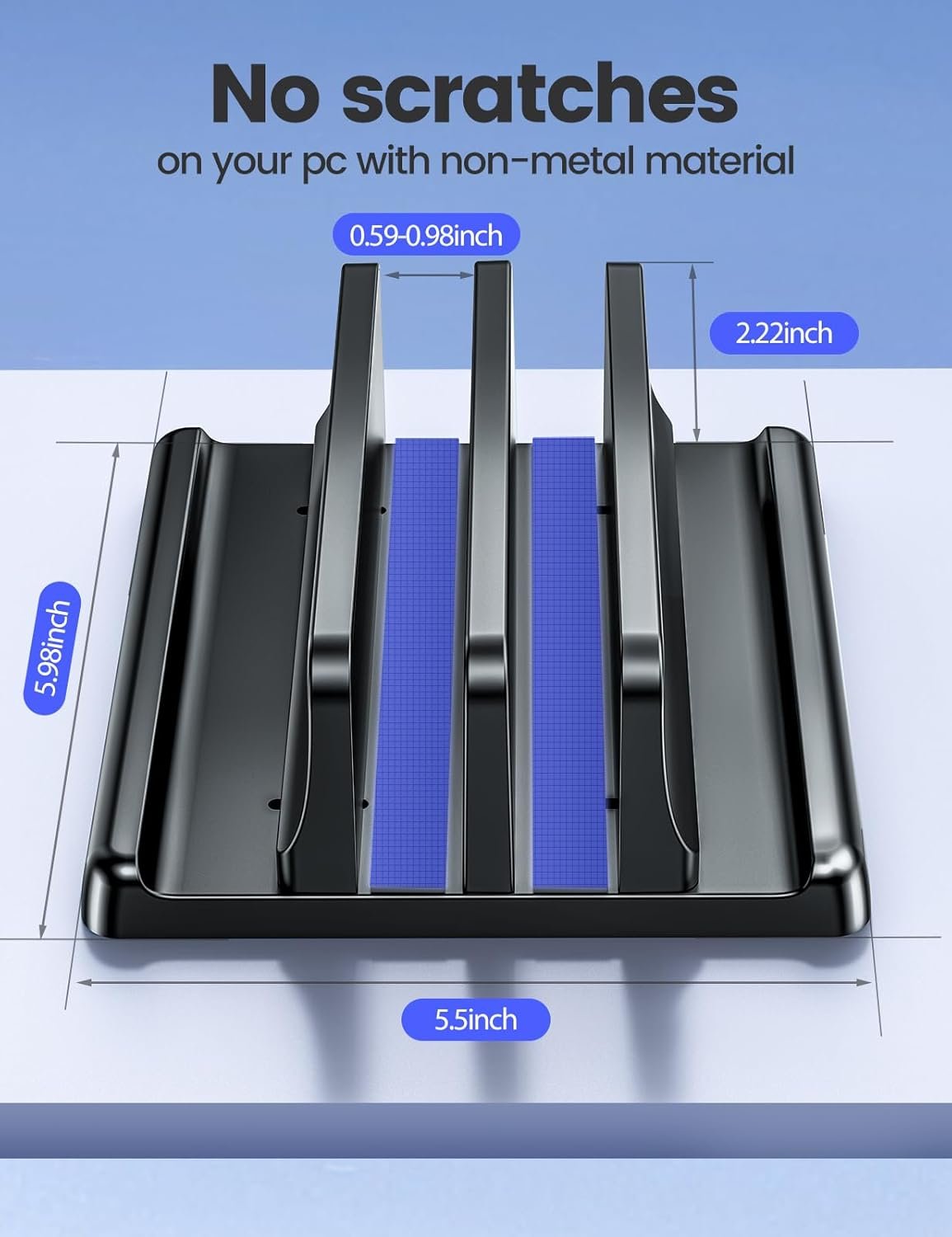
Vaydeer Vertical Laptop Stand for Desk, Dual-Slot Plastic Laptop Holder with Space Saving 4-in-1 Design, Adjustable Laptop Stand Supports MacBook, Chromebook, Surface etc(5.98 x 5.51 x 2.17 inch) — How to Use & Practical Guide

What this fixes for you
If your desk looks like a laptop graveyard—machines stacked flat, cables everywhere, no room for your coffee—this vertical stand clears that chaos in about thirty seconds. The Vaydeer dual-slot stand holds up to two laptops upright, reclaiming horizontal desk space you probably forgot existed. For tradies running a home office alongside job-site admin, or small-business owners juggling a work laptop and personal machine, it's a cheap fix for a cluttered workspace. At under $20, it's not a life-changing purchase, but it solves a real annoyance without fuss.
Before first use
- Unbox and inspect — Check the plastic body for cracks or warping from shipping. Products in this price range occasionally arrive with minor cosmetic damage.
- Remove protective film — There's typically a thin plastic film on the base and slot dividers. Peel it off so your laptops sit flush against the rubberised padding.
- Wipe down the slots — Give the interior surfaces a quick wipe with a dry microfibre cloth to remove dust or manufacturing residue.
- Measure your laptops — Check the thickness of your devices with lids closed. Most stands like this accommodate laptops roughly 10–25mm thick, but verify yours fit the adjustable slot widths.
- Choose your desk location — Pick a spot within cable reach of your monitor, dock, or USB hub. The stand's footprint is about 15cm × 14cm, so it tucks in beside most monitors easily.
First-time setup
- Adjust the slot widths — The Vaydeer stand features adjustable dividers. Slide them to match your laptop's thickness, leaving 1–2mm clearance so the machine slides in and out without scraping but doesn't wobble.
- Position the stand — Place it on a stable, flat surface. Keep it away from desk edges where a knocked elbow could send your laptop to the floor.
- Insert your primary laptop — Slide your main work machine into the front slot, ports facing whichever direction suits your cable routing. Ensure it sits evenly on the base padding.
- Add a second device if needed — The rear slot can hold a second laptop, tablet, or even a large external hard drive in a protective case.
- Connect cables — Run your power adapter, USB-C hub, or docking station cables to the laptop while it's vertical. Use cable clips or velcro ties to keep things tidy behind the stand.
- Test stability — Give the desk a light bump. The stand should stay put. If it slides, consider adding small rubber feet or a non-slip mat underneath.
Daily-driver tips
- Keep charging cables connected — Leave your power adapter plugged in so the stand becomes a grab-and-go docking point. When you return from site, the laptop drops straight back into its spot and starts charging.
- Use clamshell mode properly — If you're running the laptop closed with an external monitor, check your system preferences (macOS: "Displays" settings; Windows: "Power & Sleep" settings) to prevent the machine sleeping when the lid shuts.
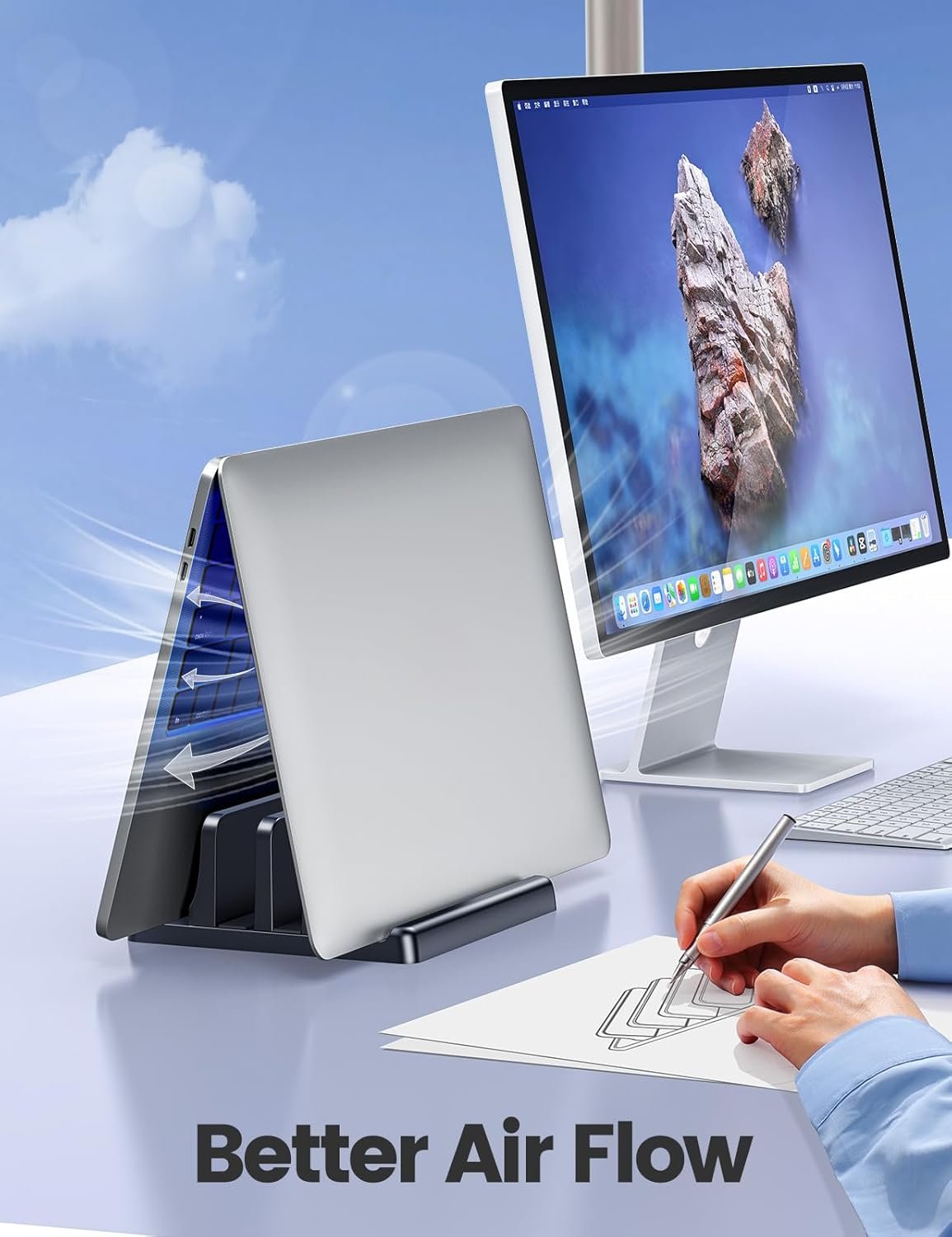
- Rotate slot assignments — If you use two laptops, put the hotter-running machine in the front slot where airflow is better. Vertical orientation generally improves passive cooling compared to flat stacking.
- Dust weekly — A quick wipe of the slots prevents grit buildup that can scratch laptop casings over time. Takes ten seconds with a microfibre cloth.
- Don't force thick cases — If your laptop wears a chunky protective case, remove it before docking or you'll stress the slot dividers.
Common pitfalls
- Overtightening the slots — Clamping the dividers too snugly can scratch aluminium laptop bodies or put pressure on the screen hinge. Leave a hair of clearance.
- Ignoring weight limits — Plastic stands in this category typically handle standard laptops up to about 2kg each. Don't try to store heavy workstation-class machines or gaming laptops with massive cooling systems—use a metal stand instead.
- Poor cable management — Cables dangling off the desk create trip hazards and put strain on ports. Route them neatly behind the stand and secure with ties.
- Placing near heat sources — Keep the stand away from direct sunlight through windows or beside heaters. Plastic can warp over time with sustained heat exposure.
Maintenance and longevity
There's not much to maintain here—it's a simple plastic stand with no moving parts. Wipe down the rubberised padding monthly with a damp cloth to remove oils and dust. If the padding starts peeling after a year or two, you can apply adhesive-backed felt or thin rubber strips from a hardware store to extend the stand's life.
Check the slot adjustment mechanism every few months. If the dividers become loose and won't hold position, a small piece of electrical tape on the rail can add friction. Avoid using harsh chemical cleaners on the plastic—warm water and mild dish soap are fine if needed.
When to upgrade or replace
Consider replacing this stand when the plastic shows visible cracks, the padding has worn through, or the dividers no longer hold their position reliably. If you move to heavier laptops—say a 16-inch MacBook Pro or a thick workstation—upgrade to an aluminium vertical stand in the $40–$70 range for better stability and heat dissipation. For most users running standard ultrabooks or Chromebooks, though, this budget stand should last two to three years of daily use without drama.